Introduction
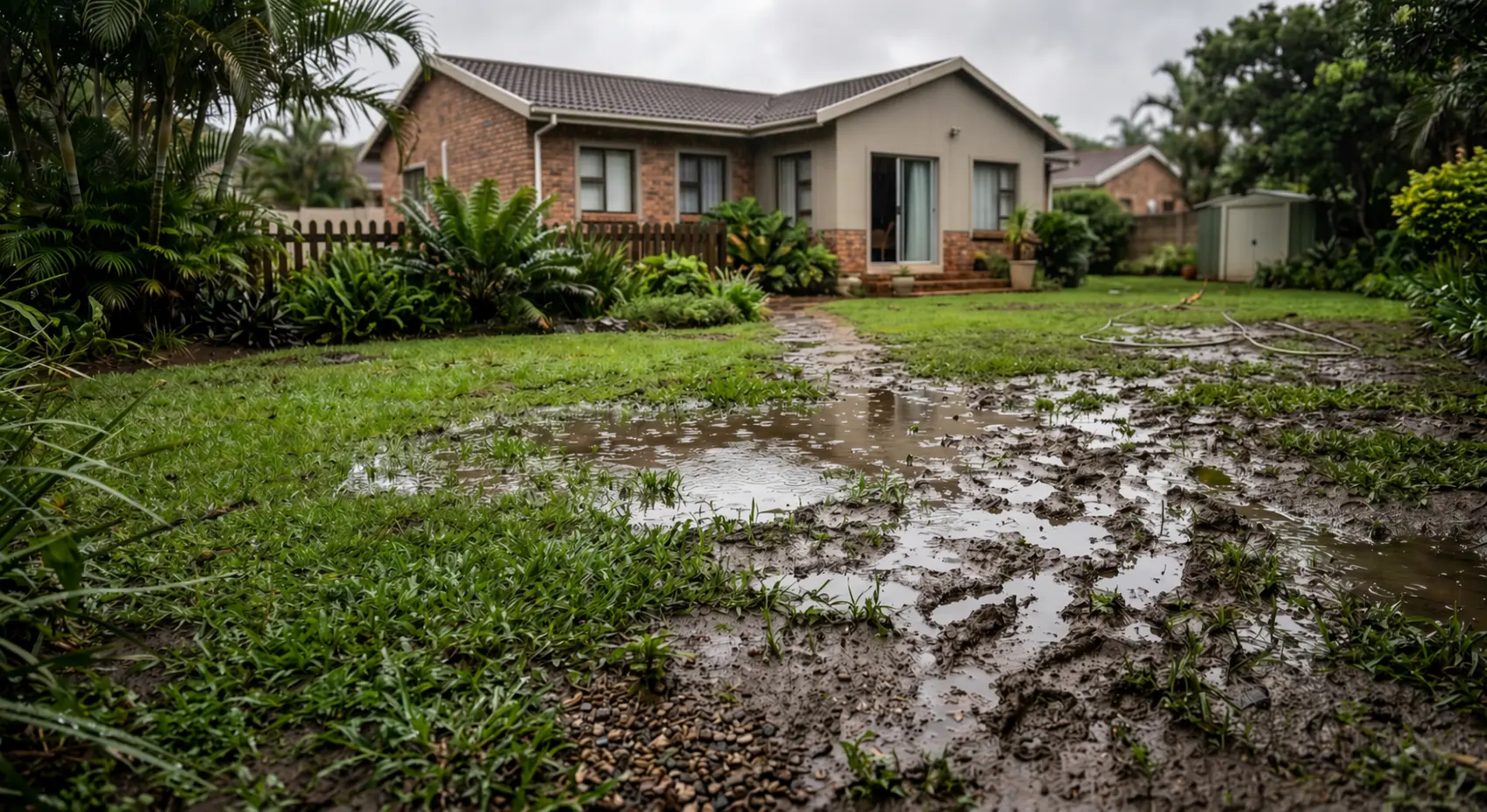
If your yard stays wet long after the rain has stopped, you’re dealing with more than an inconvenience—you’re dealing with a drainage issue that will continue to affect your lawn, soil health, and even your property over time.
In Portland, this is extremely common. The combination of heavy seasonal rainfall, clay-heavy soil, and uneven grading means water often has nowhere to go. Instead of draining properly, it lingers, pools, or slowly turns your lawn into soft, unusable ground.
The good news is that drainage problems are fixable—but only when the cause is properly identified.
Ground Up Services works with homeowners across the Portland metro area to correct drainage issues at the source, not just mask the symptoms.
How to Tell You Have a Drainage Problem
Some drainage issues are obvious, but others build slowly over time.
Common signs include:
- Water pooling in specific areas after rain
- Soil that stays soft or muddy for days
- Grass that turns yellow or dies in patches
- Moss spreading in consistently damp areas
- Noticeable erosion or soil movement
If you’re seeing more than one of these, the issue is unlikely to resolve on its own.
What Actually Causes Drainage Issues
Drainage problems rarely come from a single cause. Instead, they’re usually a combination of site conditions and long-term soil changes.
The most common factors in Portland yards include:
1. Compacted soil
Over time, soil becomes dense—especially in yards with foot traffic or poor maintenance. This prevents water from soaking in properly.
2. Poor grading
If a yard isn’t properly sloped, water naturally collects in low points instead of flowing away from the property.
3. Clay-heavy soil
Many Portland properties have soil that naturally holds water instead of draining it.
4. Lack of drainage systems
Without proper drainage infrastructure, water has no controlled path to exit the yard.
Why Surface Fixes Don’t Last
A common mistake homeowners make is trying to solve drainage issues with temporary fixes—like adding soil or reseeding wet areas.
While this might improve appearance briefly, it doesn’t change how water moves through the yard.
Without addressing grading, soil structure, or water flow, the problem almost always returns.
That’s why proper evaluation is critical before any work begins.
Effective Long-Term Solutions
Drainage solutions depend on the property, but most successful projects involve one or more of the following:
Grading adjustments
Reshaping the land so water flows away from the home instead of pooling.
French drains
Underground systems that collect and redirect water away from problem areas.
Soil improvement
Loosening compacted soil to allow better absorption and drainage.
Retaining walls
In sloped yards, these help control water movement while creating usable space.
Check out our Landscape Construction Services (for structural drainage solutions like retaining walls and grading work)
The Impact of Ignoring Drainage Issues
Leaving drainage problems untreated can lead to:
- Ongoing lawn damage
- Increased moss and weed growth
- Soil erosion
- Reduced usable outdoor space
- Potential foundation risks in severe cases
The longer water sits, the more damage it causes—not just to your lawn, but to the structure of the soil itself.
Why Local Experience Matters
Drainage solutions in Portland aren’t one-size-fits-all.
The local climate means systems need to handle:
- Heavy seasonal rainfall
- Slow-drying soil conditions
- Sloped residential lots
- Dense urban landscaping layouts
A solution that works in a dry climate often fails here. That’s why local experience is critical.
Fix Drainage Before It Gets Worse
Drainage problems rarely improve on their own. In fact, they usually become more expensive to fix over time.
Ground Up Services helps homeowners identify the real cause of water issues and build solutions designed to last in Portland conditions.
Book a drainage assessment with Ground Up Services to protect your yard and restore usability.