Portland summers fool a lot of homeowners.
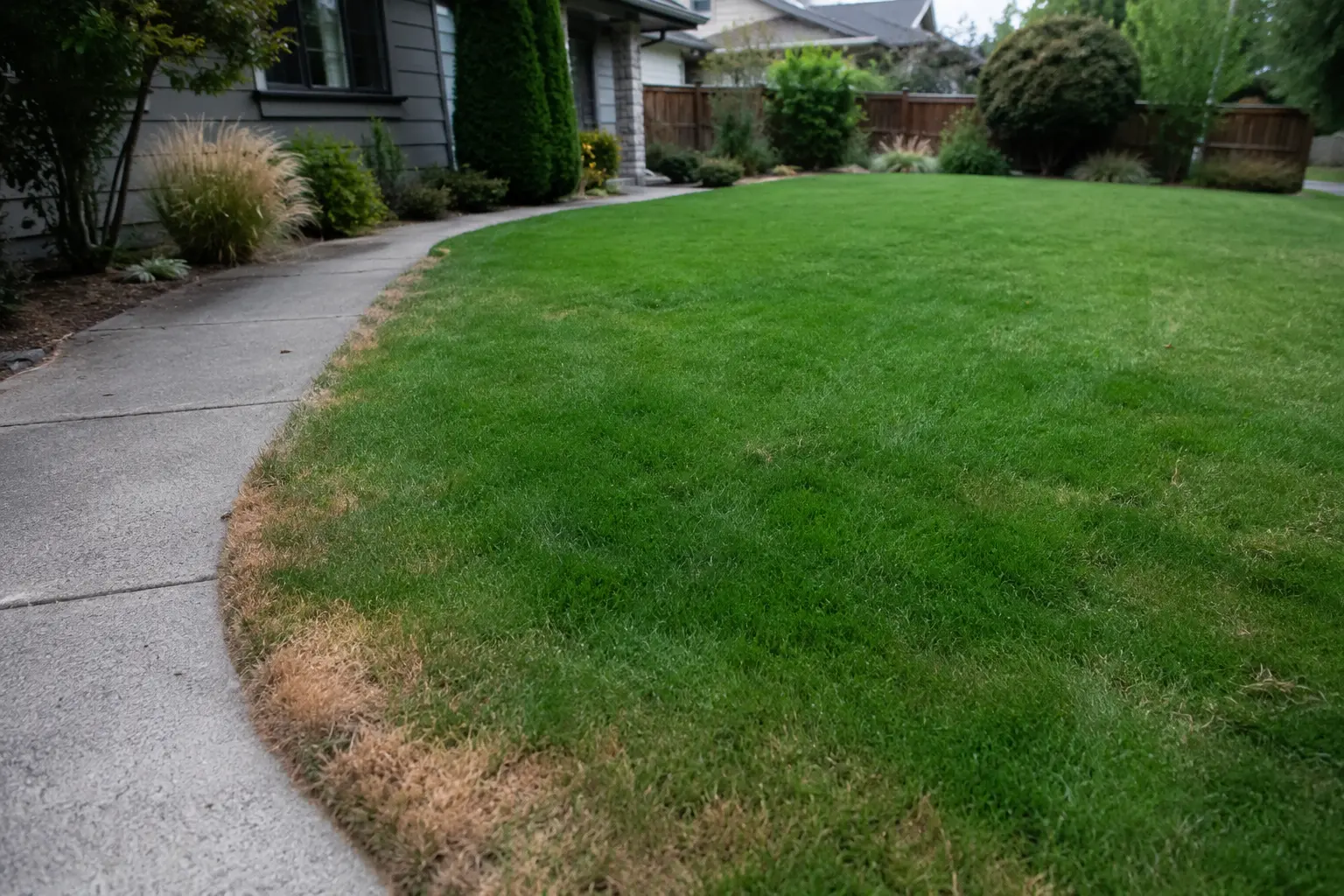
After eight months of rain, it’s easy to assume the lawn can handle a dry stretch on its own. The grass looks fine in June. By mid-July, it’s yellow at the edges, patchy in the open areas, and recovering slowly — if at all — by fall.
What most people miss is that summer damage in Portland isn’t dramatic. It builds slowly, week by week, as a combination of heat, dry soil, and incorrect care habits push the lawn past the point where it can bounce back without help.
Lawn maintenance in Portland during summer months isn’t optional upkeep. It’s active management during the most stressful season of the year for cool-season grass — which is what almost every Portland lawn is made of.
Ground Up Services works with homeowners across the Portland area who wait too long to adjust their summer approach, then wonder why their lawn takes all of fall to recover.
Get ahead of the summer decline. Reach out to Ground Up Services today before heat stress turns into something harder to fix.
Cool-Season Grass Does Not Like Portland Summers
This is the root of most summer lawn problems.
Portland lawns are predominantly fescue, ryegrass, and bluegrass — all cool-season varieties. They grow best between 60°F and 75°F. When temperatures push into the 80s and 90s, which happens regularly in July and August, these grasses slow down dramatically.
What that looks like:
- Growth slows or stops entirely
- Color shifts from green to dull olive or yellow-brown
- Grass blades narrow and curl at the edges
- Recovery from mowing stress takes longer
This isn’t lawn failure — it’s dormancy. But it becomes permanent damage quickly if the lawn is also being mowed too short, watered inconsistently, or neglected during a heat event.
Watering Habits Are Either Helping or Hurting
Most Portland homeowners underwater during summer because the lawn went months without needing irrigation. The adjustment doesn’t always happen fast enough.
Common mistakes that worsen heat stress:
- Shallow, frequent watering that keeps moisture at the surface
- Watering in the middle of the day when evaporation is highest
- Inconsistent cycles that wet and dry the soil repeatedly
- Relying on rainfall that stops almost entirely July through September
Cool-season grass needs deep, infrequent watering during summer — ideally 1 to 1.5 inches per week, applied two to three times rather than daily. Deep watering pushes roots further into cooler soil layers, which is what allows the grass to handle
Summer Mowing Is Where Most Damage Gets Done
heat at the surface.
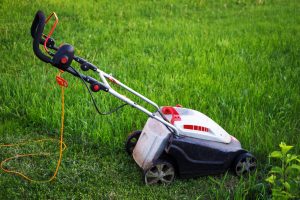
Mowing during heat stress is one of the fastest ways to push a lawn from stressed to damaged.
What goes wrong:
- Cutting too short removes the shading the grass provides for its own root zone
- Mowing during the hottest part of the day adds physical stress on top of heat stress
- Dull blades tear grass instead of cutting it, creating open wounds during dry conditions
- Removing more than one-third of the blade height at once shocks already-struggling grass
During summer, most Portland lawns should be kept at 3.5 to 4 inches. That height shades the soil, reduces moisture loss, and keeps root temperatures manageable.
Thatch Gets Worse in Dry Conditions
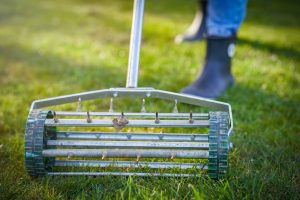
Thatch — the layer of dead organic material between the soil and the living grass — breaks down more slowly when the soil is dry. That means it accumulates faster in summer than most homeowners realize.
As thatch deepens during dry months:
- Water rolls off instead of penetrating to roots
- Fertilizer gets trapped above the soil surface
- Grass roots stay shallow, making the lawn more vulnerable to heat
- The layer becomes a barrier to recovery when fall rain returns
A lawn that went into summer with moderate thatch can end the season with a serious buildup problem — especially if it wasn’t detached properly the previous fall or spring.
Fertilizing in Summer Usually Makes Things Worse
This is one of the most consistent mistakes in summer lawn maintenance in Portland.
High-nitrogen fertilizer pushes rapid top growth. During summer heat, that rapid growth creates more demand on a root system that’s already stressed. The result is:
- Grass that looks briefly greener, then declines harder
- Increased disease susceptibility from soft, fast-growing tissue
- More frequent mowing during a period when mowing is already damaging
- Root stress that weakens the lawn heading into fall
Summer is not the time to feed. A light application of slow-release fertilizer in late spring is appropriate. The next meaningful feeding should wait for early fall.
Why Most Summer Lawn Products Don’t Do What They Promise
Weed-and-feed products, fast-release fertilizers, and summer “green-up” treatments are marketed directly at the frustration homeowners feel watching their lawn go dormant.
They produce visible results quickly — which is the point. But that quick green-up comes at a cost to the root system that shows up in fall when the lawn should be recovering naturally and isn’t. Real yard service in Portland, Oregon during summer means holding back what would damage the lawn and doing the specific, targeted work that protects it — not treating summer dormancy like a problem that needs an immediate fix.
What Summer Lawn Care Actually Looks Like
A well-managed Portland lawn in summer requires:
- Deep, infrequent watering on a consistent schedule
- Mowing at the right height with sharp blades, in the morning
- No high-nitrogen fertilizing from June through August
- Spot treatment for weeds only — not blanket applications
- Monitoring thatch depth so fall cleanup starts with real information
It’s less dramatic than a spring restoration project, but consistency through these months is what determines how quickly the lawn recovers when cooler weather returns.
When to Get Help
If your lawn struggles every summer and takes most of fall to look right again, the issue usually isn’t the heat — it’s the maintenance approach going into and through the summer months.
Ground Up Services helps Portland homeowners build a seasonal maintenance schedule that accounts for summer stress, not just spring and fall work.
Explore our full maintenance services and schedule a visit before peak summer heat sets in.